
Conference reflections
RHEA-member Lau Lingenti recently presented at York university in Toronto, Canada at the 2026 APA Division 24 Spring. This year’s theme, "Madness, Mysticism, and the Reenchantment of Psychology", was an invitation to ask what psychology might become when we open it to the breadth of human experience: the strange, the sacred, the unsettling, and the transformative. Over three days in Toronto, scholars, practitioners, artists, activists and curious minds came together across disciplines spanning clinical psychology, critical psychology, mad studies, disability studies, social work, sociology, theoretical psychology and many more, to reflect on what it means to approach the mind with seriousness and expansiveness.
A central thread throughout the event was the importance of community at a time when our systems of knowledge, care and shared meaning are under strain. The gathering positoned itself as an act of collective imagination and a space that was intentionally designed to resist isolation. The program featured an unusually diverse and engaged community, including three keynote speakers (Marco Gemignan, Báyò Akómoláfe and Micha Frazer-Carroll) whose work challenges and expands conventional psychological paradigms. Alongside the keynotes, the program features over 150 contributors across paper sessions, symposia, workshops, experiences, and a poster session, this vibrant assemblage of perspectives representing some of the most vital conversations happening at the edges of psychological theory today. It was an inspiring environment for Ligenti, for them to share their own work and to be a part of the conversation about how to drive the transformation of the field of psychology towards epistemic and ontological justice.
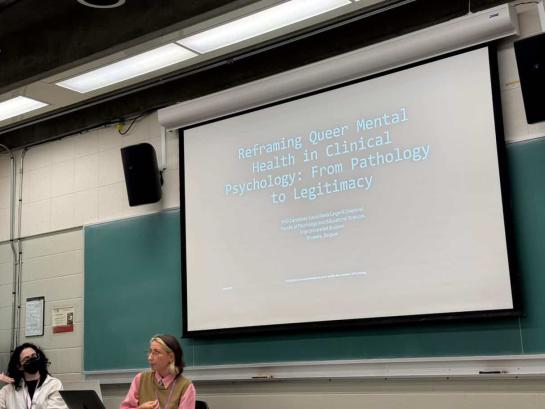
Lau's presentation was part of the thematic panel "Queer Grief, the Dead, and the Magic of What Remains" and traced the epistemic journey of their PhD research as it moved from a positivist framework - initially designed as a randomised controlled trial-based intervention study directed at the queer community - toward a participatory action research approach grounded within community itself. They reflected on how this shift required not only methodological and ontological reorientation, but also holding personal tensions and engaging in layers of my own identity. They moved away from the expectation of the so-called "neutral researcher" and toward embracing their own positionality as a queer person and community member. This transition opened up new possibilities for co-constructed knowledge while also surfacing tensions around researching queer mental health from within the field of clinical psychology with its rootedness in pathologization and violence against marginalized communities. Lau further discussed where decolonial perspectives and contemporary queerness can reconcile despite their differences to become a productive site of rethinking what rigorous, accountable and community-rooted queer research can look like today.