

On the International Menstrual Health Day (28 May 2026), dr. Saloua Berdai Chaouni participated in the Gender and Health Inspiration Day, organized by the Flemish Agency for Home Affairs. As a gerontologist working at Society and Ageing Research Lab (VUB) and a RHEA member, she joined a panel discussion alongside Flemish Minister of Welfare Caroline Gennez, and other inspiring fellow panelists Dr. Jakob Christiaens, Dr. Els Dufraimont, Prof. Sarah Lebeer, Prof. Marie-Anne Vanderhasselt and Dr. Rik Van Hoof.
Reflection on the Panel
The event offered an important opportunity to inspire on the growing attention for gender and women’s health within policy and healthcare. In this piece, I will share some reflections on the topics addressed. First and foremost, I strongly welcome the fact that gender and women’s health are finally receiving more explicit recognition on the policy agenda. Despite women representing half of the population, we continue to experience the consequences of historical biases in health research, healthcare systems, and policymaking. For too long, women’s health has been understood through a male gaze. It is time to move beyond the assumption that women are simply “small men” and to build healthcare systems that recognize and respond to women’s specific health realities.
Need for an intersectional lens
At the same time, it is key that this movement towards greater gender equality adopts a broad lens of inclusion. Future-oriented healthcare must be grounded in diversity, equity, and the recognition of different lived realities. Women do not experience health inequalities in the same way. Mechanisms such as racism, ageism, classism, ableism, and other forms of structural exclusion intersect and reinforce one another, creating cumulative health disadvantages across the life course. Based on my research that examines the effects of racism as a social determinant of health underlying accelerated ageing among racialized older adults, I know that an intersectional lens is key to moving towards health equity.
For example, during the panel discussion, reference was made to the need for greater awareness among healthcare professionals regarding the underdiagnosis of heart attacks in women. This underdiagnosis is partly rooted in dominant medical understandings of heart attack symptoms, which have historically been based on male presentations, such as chest pain radiating to the left arm. Women, however, often present with less specific symptoms, including extreme fatigue, nausea, and shortness of breath. As fellow panelist Rik Vanhoof highlighted, these symptoms are often attributed to burnout or menopause, leading to missed diagnoses. Many healthcare professionals continue to view women’s cardiovascular health through a predominantly male lens. Vanhoof therefore argued for preventive policies that recognize menopause as a critical period for cardiovascular screening, given the declining protective effects of estrogen. An intersectional perspective adds another important dimension to this discussion. Alongside gender-sensitive prevention, we must also address the role of racism and other forms of structural inequality that contribute to chronic stress, accelerated biological ageing, and elevated health risks among racialized women.
As for Black women, for example, an additional layer of medical racism often comes into play. They face increased cardiovascular risks linked to chronic stress exposure, while simultaneously being more likely to have their pain, symptoms, and health concerns dismissed or underestimated. Research has repeatedly demonstrated that racism functions as an independent determinant of health, even after controlling for gender and socioeconomic status. In the United States, Black women are approximately twice as likely to develop dementia as White women, while also facing greater barriers to accessing high-quality care. In Belgium, however, we lack such detailed data because research on women’s health and racism remains extremely limited.
Need for inclusive research and epistemic justice

Structural exclusion not only affects health outcomes, access to care, and quality of care. It also shapes what counts as legitimate knowledge, which blind spots persist in research, and how healthcare professionals are educated and trained.
The need for intersectionality extends beyond healthcare delivery and policy; it is equally essential in research on women’s health. Like several of my fellow panelists, I strongly support increased investment in women’s health research. However, such investment must be accompanied by a commitment to inclusivity and representation. Ensuring that the diversity of all people with XX chromosomes, as well as those who identify as women, is adequately represented in research is not a “nice to have” but a necessity. Without inclusive research, we risk reproducing the very biases that have historically shaped medical knowledge and healthcare practices.
Robust, evidence-based policy and education on women’s health can only emerge from knowledge that reflects the full diversity of women’s experiences and bodies. This requires actively including groups that have traditionally been marginalized or excluded from research, including racialized women, migrant women, women living in poverty, women with disabilities, transwomen, LGBTQIA+ individuals, and older women. If we are serious about advancing women’s health, we should be critical about whose experiences count as evidence and whose realities inform scientific knowledge. This also requires innovative methodological approaches in research where we move beyond simply adding women into existing research frameworks and instead transform the ways knowledge is produced, ensuring that marginalized and racialized women are not treated as peripheral populations but as essential contributors to scientific understanding. In other words, health justice can only be build up through epistemic justice.
Unique chance for inclusive innovative policy approaches
This is why intersectionality should not be viewed as an additional layer of inclusion, but as a fundamental prerequisite for effective and sustainable health policy and equitable healthcare. At this important moment, when women’s health is finally receiving the attention it deserves, we have a unique opportunity to get it right from the start by embedding intersectionality as a structural lens in both policy development and implementation. Advancing women’s health cannot be measured solely against the experiences and needs of White, heterosexual, middle-class women.
Intersectionality encourages innovation by moving beyond siloed approaches and simplistic understandings of health challenges. Rather than reducing complexity, it helps us engage with the interconnected realities that shape health and wellbeing. Complex problems require equally nuanced solutions. Simple interventions may alleviate symptoms, but they rarely address underlying causes or generate sustainable change. This calls for action at multiple levels: within individual care relationships, across healthcare organizations and educational institutions, and within broader policy, research, and societal structures.
Finally, I hope that this growing movement also creates space for innovation emerging from the margins. Many community-led initiatives approach health in broader ways, recognizing not only biomedical and individual dimensions, but also collective, ecological, cultural, and relational aspects of wellbeing. Collective care, connection with nature, artistic expression, rituals, and community-building all hold significant healing potential. These perspectives deserve a meaningful place in how we understand, promote, and organize health.
A gender and health policy that embraces complexity and intersectionality has the potential to be stronger, more inclusive, and more sustainable. By acknowledging the interconnected nature of health inequalities, we can move towards healthcare systems and policies that work for all women, in all their diversity.
Biography
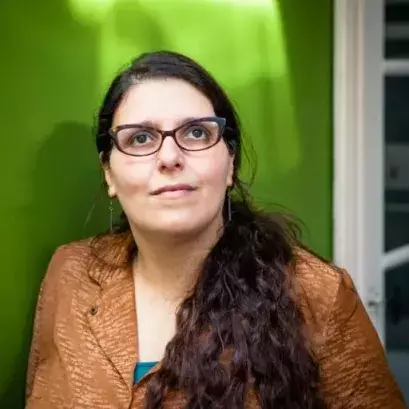
Saloua Berdai Chaouni is a doctor in Adult Educational Sciences (Vrije Universiteit Brussel) and a master’s in Biomedical Sciences and Gerontological Sciences and obtained several qualifications in Management. After a short academic period conducting in-vivo neurophysiological research, she stepped into the social work field. She published her first work on older migrants in 2005 as a policy report in Brussels. This started a decade of innovative practice, policy, consulting, advocacy, and action research work on the intersection of (aged) care and ethnic diversity in Belgium and Europe. She received in 2012 the Charles Ullens reward by the King Baudouin Foundation for her policy-relevant research work on older migrants in Belgium. In 2018, she was acknowledged for her academic and educational work as a member of the Belgian-Moroccan diaspora with a Diwan Award. Saloua is currently active as a lecturer and a researcher at the Karel de Grote University College and is affiliated to the VUB. Her current research work focuses on older migrants, inclusive aged & dementia care, and decoloniality of research and academia. She is also active in several organizations and policy-making boards aiming for inclusive care for ethnic minorities in Belgium and Europe.